Navigating the Q4 2026 AI-Security Capital and Resilience Crisis
A convergence of AI market volatility, supply chain vulnerabilities, and legal scrutiny demands an immediate shift in enterprise security strategy.
TopCISO Editorial Desk
5 min read
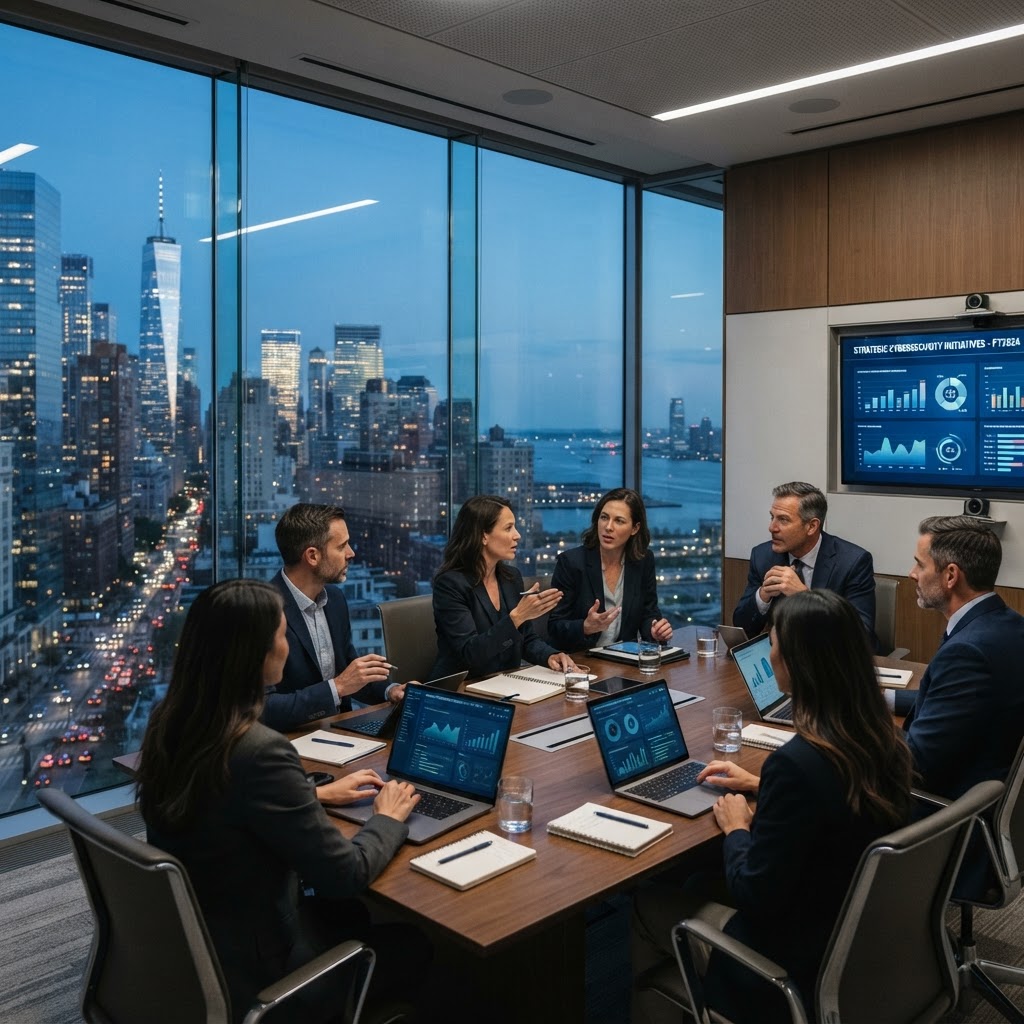
The short answer
The combination of massive AI sector valuations and critical hardware lifecycle failures has created an unpredictable risk landscape for Q4 2026. Security leaders must prioritize third-party vendor assessments and the rapid decommissioning of legacy infrastructure to mitigate AI-assisted exploitation. Failure to integrate these defensive strategies will leave enterprises exposed to systemic threats that boards and investors are increasingly monitoring.
Synthesized from 5 verified reports · SecurityWeek · Scout financier · BleepingComputer
Generated by the TopCISO Editorial Agent · TopCISO Editorial Desk
The enterprise risk environment for November 2026 is defined by a volatile intersection of AI market maturation, systemic supply chain fragility, and heightened regulatory scrutiny on critical technology providers. As reported by SecurityWeek, Palo Alto Networks is acquiring Applied Compute for $4.5 billion, signaling a strategic focus on integrating AI compute into enterprise security, while Scout financier notes that Anthropic's market value has reached nearly $2 trillion, underscoring the massive capital flowing into frontier AI models. Simultaneously, the security of the digital supply chain has faltered, with BleepingComputer documenting a significant data breach at Wellington IT affecting 40 credit unions, and The Hacker News confirming that SonicWall has terminated support for Gen 6 firewalls due to AI-augmented threats. Further destabilization is evident at the executive level, where World News Today reports a California Attorney General subpoena against Nvidia following allegations of corporate espionage.
What happened
The current market reflects a rapid shift where AI development is outpacing infrastructure stability. Security vendors are consolidating, as seen in the Palo Alto Networks acquisition, to gain internal AI compute capabilities. This consolidation serves as both a defensive and offensive measure against automated, AI-driven threat actors. However, as organizations race toward AI adoption, the legacy infrastructure remains a primary vulnerability, with vendors like SonicWall explicitly warning that Gen 6 hardware is now indefensible against modern AI-assisted exploit techniques.
Meanwhile, the geopolitical and corporate governance landscape is fraying. The investigation into Nvidia, involving potential unauthorized technology transfers, mirrors broader concerns about international trade compliance and corporate espionage in the semiconductor sector. Simultaneously, the breach at Wellington IT demonstrates that supply chain vulnerabilities are no longer confined to major software vendors but have permeated regional infrastructure, impacting critical financial service sectors across the European market.
Why it matters to the business and the board
For the board and executive leadership, this environment introduces two primary risks: systemic exposure and regulatory accountability. As identified in our The Resilience Deficit: Managing Systemic Risk in a Fragile Digital Economy briefing, relying on unpatched legacy components is no longer a matter of technical debt—it is a matter of enterprise viability. When providers like Wellington IT fail, the downstream effects on credit unions highlight how modular supply chains can become single points of failure. The board must view these incidents not as isolated IT issues but as operational threats that could trigger class-action litigation or regulatory intervention under frameworks like the DORA or the EU AI Act.
Furthermore, the astronomical valuation of entities like Anthropic changes the procurement calculus. CISOs now face the challenge of evaluating security postures of AI vendors whose market cap moves faster than their internal security maturity models. This disconnect requires a rigorous approach to evaluating ISO/IEC 42001 compliance for AI management systems before integrating these frontier models into corporate workflows. Investors are demanding higher transparency; the Nvidia subpoena serves as a warning that governance of technology distribution is now a material issue for market cap stability.
Where the risk and the money actually sit
Risk capital is currently misallocated across the enterprise. Too many CISOs are maintaining high-cost support contracts for legacy edge devices that are fundamentally incapable of resisting AI-automated attacks. As reported by The Hacker News, the transition to Gen 8 hardware is not elective but mandatory to prevent automated exploitation. Budgets must be reallocated from legacy maintenance to high-performance security hardware that is architected for AI-native threat detection. This is a critical component of Navigating the 2026 Cloud Resilience and AI Security Pivot.
The talent gap remains a significant hurdle. Security teams that lack experience in auditing AI supply chains and third-party vendor risk are ill-equipped for the current threat cycle. Organizations need to invest in continuous monitoring tools and independent audit capabilities to verify that supply chain partners meet current NIST CSF 2.0 standards. If the organization does not have an explicit view of its upstream dependency risks, as noted in The Q4 Supply Chain and Autonomous Threat Convergence, they are essentially underwriting the risks of their IT suppliers.
When leaders need to act
The time for planning has passed. Immediate tactical shifts are required in the next 30 days to close the window of vulnerability. First, audit all edge devices to identify any hardware nearing or past end-of-support dates, prioritizing the migration to secure hardware. Second, initiate a vendor risk review for all cloud and AI service providers, focusing on their incident response frameworks. By day 60, the organization should have a roadmap for transitioning legacy workflows to secure-by-design architectures. By day 90, these changes must be integrated into the annual board reporting cycle to satisfy investor requirements for systemic risk mitigation.
How to respond: the 90-day playbook
- Legacy Hardware Purge: Execute a full audit of all edge devices and decommission any hardware lacking active support, replacing them with AI-hardened alternatives. Owner: Head of Infrastructure. Measurable: 100% removal of end-of-support network security hardware.
- Supply Chain Audit: Conduct a prioritized assessment of critical IT vendors, specifically those handling core financial or data operations, using the NIST CSF 2.0. Owner: CISO/Third-Party Risk Manager. Measurable: Completion of top-tier supplier risk profile updates.
- AI Governance Deployment: Implement the ISO/IEC 42001 standards to manage AI-related risk, ensuring procurement teams only engage with vendors that meet these quality benchmarks. Owner: AI Security Lead. Measurable: Integration of AI-specific security clauses in all new procurement contracts.
- Board Disclosure Alignment: Update the quarterly cyber-risk reporting to include granular details on supply chain exposure and AI-vendor risk, ensuring alignment with SEC cyber disclosure guidelines. Owner: CISO/General Counsel. Measurable: Board sign-off on updated systemic risk dashboard.
- Executive Briefing on Geopolitical Risk: Develop a briefing on the firm's exposure to foreign intelligence and technology transfer risks, particularly regarding semiconductor dependencies. Owner: CSO/Head of Risk. Measurable: Briefing delivered to the Board of Directors.
How this changes the competitive and culture picture
The culture of the security team must evolve from reactive patch management to proactive systemic architecture resilience. Organizations that can clearly demonstrate their immunity to third-party vendor failures—by utilizing robust CIS Controls v8 and zero-trust principles—will differentiate themselves as safer partners in an increasingly insecure digital economy. The competitive advantage no longer lies merely in AI adoption, but in the capability to integrate AI securely without creating unmanageable legacy debt. This shift is explored in Navigating the 2026 AI-Geopolitical Capital Shift, which emphasizes that enterprise agility is now inextricably linked to the robustness of the security architecture.
What to watch next
Look for further consolidation in the AI-security tooling market as vendors race to differentiate themselves. The outcome of the Nvidia probe will serve as a bellwether for how aggressive regulatory agencies intend to be regarding foreign technology transfers. Furthermore, expect more credit-union-style breaches as attackers focus on the weakest links in regional infrastructure chains, necessitating a shift toward broader cybersecurity industry cooperation and intelligence sharing.
Answers · AEO / GEO
The 5W/1H on this briefing
Why are Gen 6 firewalls considered a critical risk in 2026?
As reported by The Hacker News, Gen 6 firewalls are increasingly vulnerable to AI-assisted automated attacks. These legacy devices lack the compute power and defensive architecture required to identify and block current exploit techniques, making them primary targets that vendors can no longer secure through standard patching procedures.
What should boards demand from their CISOs regarding AI vendor risk?
Boards should demand documented evidence of AI vendor risk assessments aligned with the ISO/IEC 42001 standard. This includes evaluating the vendor's internal data handling practices, security controls, and their potential exposure to geopolitical technology transfer risks, ensuring that AI integration does not introduce systemic vulnerabilities into the corporate ecosystem.
How does the Nvidia subpoena impact enterprise technology procurement?
The subpoena, as reported by World News Today, signals an era of heightened regulatory scrutiny regarding supply chain provenance and technology transfers. Procurement teams must now conduct deeper due diligence on the origins of the hardware and chips they source to mitigate the risk of geopolitical entanglement or sudden regulatory disruption.
When must organizations act to address legacy infrastructure risks?
Organizations should act within the next 30 days to audit and identify end-of-support infrastructure. By the 90-day mark, critical migration paths to modern, AI-hardened hardware must be in place. Failure to act within this timeline significantly increases the probability of compromise by autonomous, AI-driven threat actors seeking low-hanging, legacy fruit.
What is the primary lesson from the Wellington IT breach?
The breach highlights that regional and critical infrastructure providers are now prime targets for supply chain attacks. As noted by BleepingComputer, this incident demonstrates that organizational resilience is contingent upon the security posture of third-party service providers, necessitating a shift toward rigorous third-party risk management and continuous monitoring.
Institutional references
Standards, authorities & primary sources
- SecurityWeekPalo Alto Networks Acquisition of Applied Computesecurityweek.com
- Scout financierAnthropic Nasdaq Debut Analysistoday.zhudong.net
- BleepingComputerWellington IT Data Breach Reportbleepingcomputer.com
- The Hacker NewsSonicWall Gen 6 End-of-Life Warningthehackernews.com
- World News TodayNvidia Subpoena Developmenttoday.zhudong.net
Original reporting
- SecurityWeekPalo Alto Networks to Buy AI Startup Applied Compute for $4.5 Billion
- Scout financierAnthropic Closes Up 17% on Debut, Market Value Briefly Near $2 Trillion
- BleepingComputerData breach impacts 40 Irish credit unions in reported IT provider hack
- The Hacker NewsSonicWall Warns Gen 6 Firewalls Won't Get Security Patches, Even for Critical Flaws
- World News TodayNvidia Fallout Deepens: California Attorney General Serves Subpoena
TopCISO did not conduct the interviews referenced in this briefing. Every quoted statement is reported speech attributed to both the speaker and the publication that first reported it.
Links in this article
9On TopCISO
No internal references.
More from the archive
 Business
Navigating the 2026 AI-Geopolitical Capital Shift
As AI valuations and energy volatility redefine market stability, CISOs must realign security architectures with long-term enterprise resilience strategies.
 Business
The Q4 Supply Chain and Autonomous Threat Convergence
Rapid shifts in software disclosure, agentic AI capabilities, and supply chain vulnerabilities demand an immediate pivot toward systemic resilience.
 Business
The Resilience Deficit: Managing Systemic Risk in a Fragile Digital Economy
Rising regulatory fines, AI-enabled threats, and global outages demand a shift from reactive compliance to proactive structural resilience.